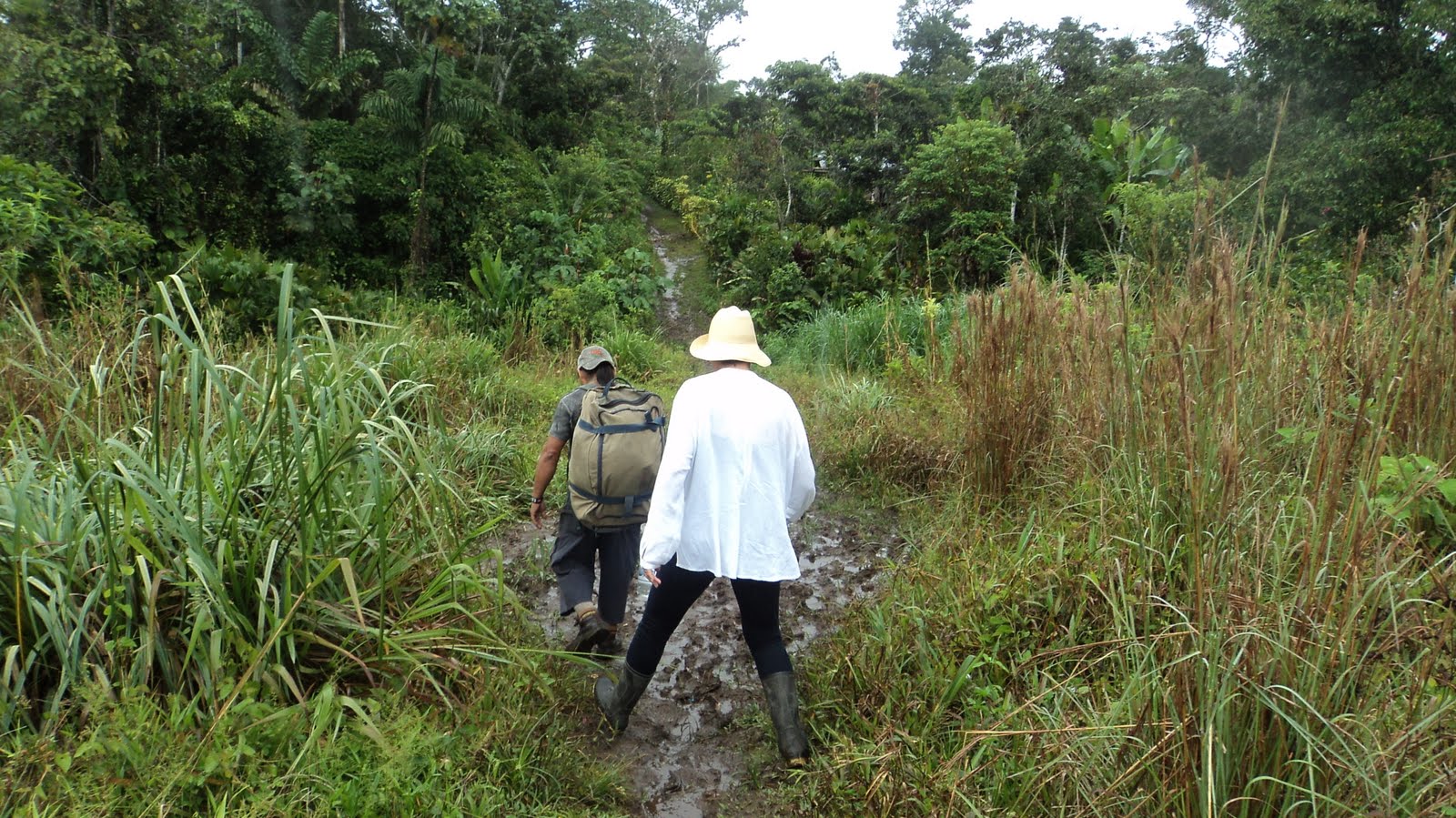
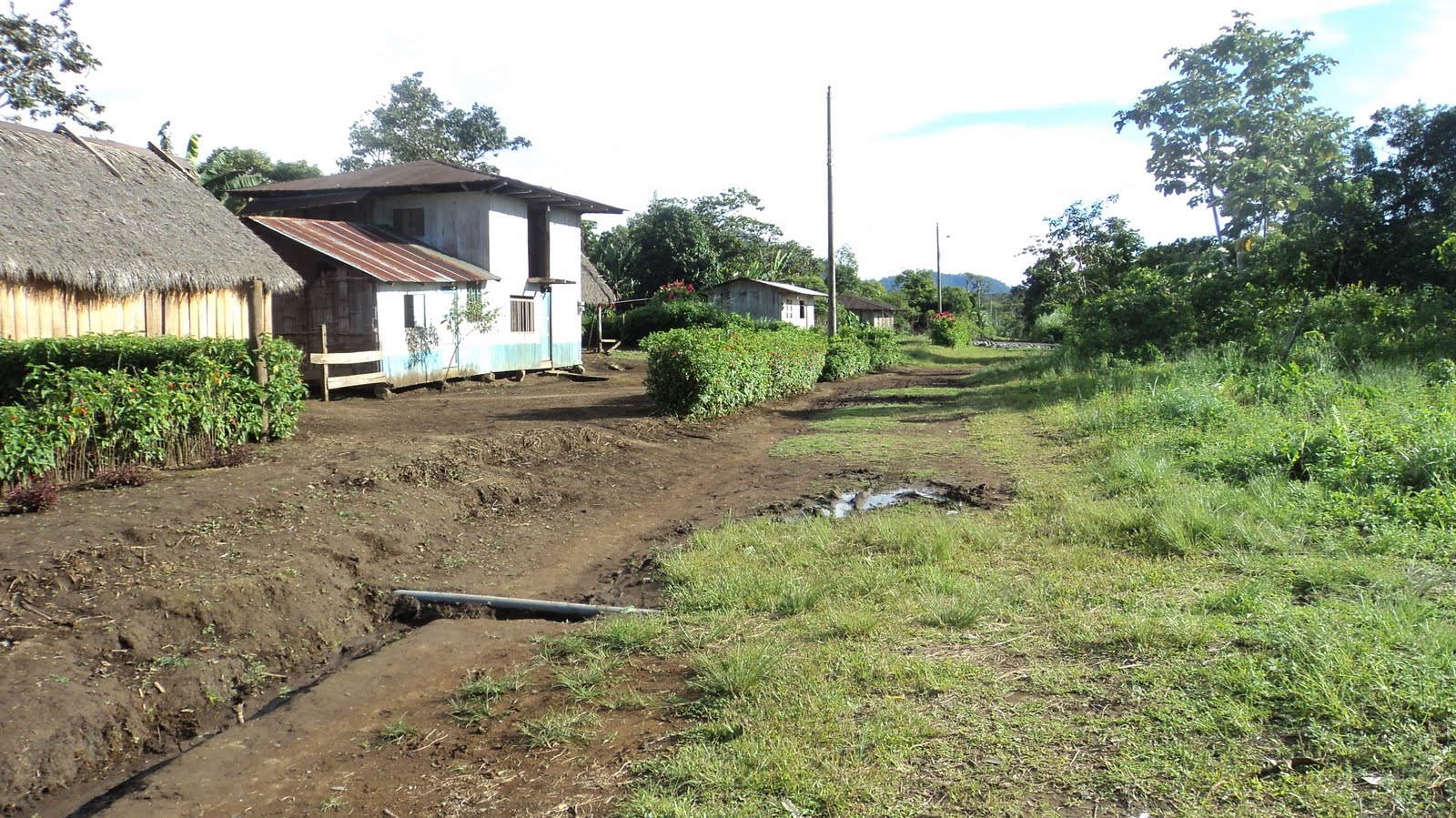
Showing posts with label Adventures. Show all posts

Sunday, April 8, 2012

Intag


I admire people who at nearly 69 years old take up a challenge that would be daunting to those half their age.  Lee Wright is one of those people.   His knowledge, skill, and experience enable him to do extraordinary things.  Yes, he's MacGyver.   Then there is Lauren Pohn who at nearly the same age is willing to extend herself into the unknown without much experience at all.    If Lee lived in the 1840's and 1850's he would have been a wagon master in a wagon train going across the sierras.  Lauren would have had the faith in her own tenacity to get on that wagon train, leave the comforts of Boston and go west.

But even Lee and Lauren need help.  It takes a local who knows the lay of the land and the people who are married to it. It also takes someone who has some serious complimentary skills himself.  That person would be Patricio Galarza.   Patricio just happens to be Wright's and our architect at Yanapamba. Patricio also has a passion for this Ecuadorian agricultural paradise known as the Intag.

The Intag is a region west of the village of Cotacachi but still in the Cotacachi canton.  It is an area that represents a piece of the old Ecuador much less affected by the Pan American Highway.  You see the Pana is like the main artery of Ecuador and those that travel and live along it see a relatively populous and commercial Ecuador.  If you want to see the road less traveled, you must get on a less traveled road.

The Intag region is generally lower in elevation than the village of Cotacachi which at 8000 feet above sea level cools to the low 50's at night and only reaches the mid 70's during the day.   I found the Intag to be a little more humid as well.  I'm sure that 70 inches of rainfall annually is a contributor to that effect.  The soil is rich there too.  Too much rain you ask?  Not really.  You can plant things on a slope that almost defies gravity and water doesn't linger there longer than necessary.  But I can tell you that it makes the rivers and streams rather robust.

As a former Iowa corn and livestock farmer I see things relationally to my past life.  I could jump in my air conditioned, sound proofed tractor, till the soil, plant my crops, spray with bad stuff and watch it all grow weed free and with a dependable outcome.  In the fall I'd be in a heated combine and the grain would flow like a river into the hopper.  The grain would then be mechanically elevated into massive bins where it was exactingly conditioned for storage.  The winter was spent on the computer analyzing stochastics to determine the best time to sell.

It's not like that in Ecuador.  The six figure tractors and combines are replaced with legions of willing workers that toil happily, share in the food wealth and support their families with their wages.  Iowa and Ecuador are on different planets agriculturally.  I know just enough to look at the dynamics of both of them and marvel.  Sometimes the old way is the best way, especially when you're on the slopes of the Andes.  You can rest assured that Lee won't be padding Tenneco’s or Monsanto's corporate profits. He will help feed many families with healthy food.  That's a novel idea!

So here are the four of us, the inquisitive displaced farmer/banker (me), MacGyver (Lee), the pioneer woman (Lauren) and the architect (Patricio) who makes dreams a reality.  The pioneer woman (Lauren) wants the architect (Patricio) to figure out how to build a bridge over a rampaging river to her property.  MacGyver (Lee) needs Patricio's truck to deliver a very heavy load of floor tile to his casita on his little farm. I'm just there to add a little muscle for the tile delivery and to share in the adventure.  Patricio is just a kind and generous man who takes the day off to help his gringo friends realize their dreams.


Our route took us from Cotacachi through Quiroga, up to Lago Quicocha, and off on a pretty primitivo road that would keep us bouncing in our seats for the next 3 hours.  As we gained in altitude we lost our scenery.  We had entered the cloud forest that kept us in a dream like state until we broke through on our descent into  the Intag.


It was the Face of the Inca that greeted us on the descent into Apuela.  I still don't know whether the Face was sculpted by man or by nature, but it is an amazing likeness none the less.


Apuela is a functional, no frills Andean farm town.  A general store sells fertilizer, cement,  fencing supplies, veterinary medicines, paint and nails.   Another store sells sandpaper and light bulbs.  Like many other pueblos in Ecuador, the tiendas in Apuela don't necessarily sell a logical array of goods.  It's just what the vendor decides to sell.  Once you get used to this system of commerce you have made your first step in acclimating to Ecuadorian retail.  


Likewise, the transportation system fits the roads or the lack of them.  Buses from Cotacachi and Otavalo reach Apuela once or twice a day subject to washouts and rock slides.  Once in Apuela your transportation locally is in a truck-bus (see above picture) when a sufficient number of pasajeros induce the local conductor to fire up the engine.  Uncle Juan may also be able to offer a ride in his pickup.  Otherwise caballos are an excellent choice if the distance is long, the grade is steep, and the roads are missing.  If you're not fortunate to have access to a horse, then your God-given feet do just fine.


When the work is done Ecuadorians like to play.  They are as good at play as they are at work.  I'd put this local team against some of the best college teams in the US.  Their teamwork and athleticism is amazing.


After about four blocks we reach the other side of Apuela and are headed again to the campo (countryside).  Our next stop is the smaller pueblo of Cuellaje.  


Cuellaje is laid back, neat, and clean.  Everyone says Ecuador is like the US in the 1950s.  I beg to differ.  Every city and town is different. Cuenca is uber-modern with some wonderful historic architecture.  Cuellaje is more like 1930's or 1940's Midwestern USA with a Latin twist.  Since cell phones don't work here there's a bit of an isolation factor.  Even the road doesn't get you to the big time (Cotacachi) in a hurry.  Nobody is in a hurry anyway, so what's the point.  Let's face it, technology, communication, and infrastructure changes culture.  I like the culture here just fine.


Even the residential areas of Cuellaje are tidy albeit weathered.  All things man-made have a story, a history, and a bit of soul. Would I live here?  Well, not yet.  If the world comes tumbling down, definitely. Cuellaje doesn't need the rest of the world.  


So now we're on the short leg of the trip from Cuellaje to Lee's little casita in the campo.   


The views along the road are like that in Fellowship of the Rings.  I kept expecting Bilbo Baggins to step out on the road at any time.  Instead it was Juan Valdez' son Juanito.  Well, use your imagination.  If you go on this trip and don't fall a little more in love with Ecuador then you don't have a heart anyway.


So now we're off to Lee's casita with the floor tile and the unloading process.


We can only get so close to the casita with the truck


So I finally get to contribute a little to Lee's adventure in Andean homesteading.


Lee's slippery little dug out steps down to his house weren't the best match for carrying 50 lb packages of tile.  We all wanted the tile and our limbs to be unbroken so using the grassy slope was the better bet to achieve our mission.


Lee and Susan's casita will soon be the 'weekend retreat' where guys go to tell tall tales, drink cerveza, listen to the roaring river, catch trucha (trout) and help Lee plant his many thousands of coffee plants and bananas.  I'm pretty sure Susan is going to be a willing weekend sojourner as well, but I think we'll have to do a few updates in the kitchen first.


Lee turns dreams into reality though and you can see the makings of something really fun happening soon.


From Lee's little outpost near Cuellaje we all jumped in Patricio's truck and headed to an oasis of food and comfort at Nalgunvi Restaurante and Hostel.  


Lauren, Patricio and Lee were ready for some delicious food by the time we got to Nalgunvi.


We didn't even have to catch our own trucha


Los frijoles fueron enormemente deliciosos también. The beans were enormously delicious also.


Nalgunvi is also home to some wonderful hot baths from the natural volcanic hot water sources.  People from Quito have discovered this and have taken the bumpy and sometimes treacherous road all the way from the capital city to enjoy a relaxing weekend.


For Lee and Patricio and me this was male bonding time.  Patricio built Lee and Susan's house nearly a year ago.  He is nearly finished with Rachel's and my house now.  Patricio has made our life in Ecuador just a little closer to Heaven.


After lunch our journey continued to the second goal of our trip: to see if Patricio could build a bridge across a raging river for Lauren.  Along the way we encounter a few more granjas (farms)


and a few young granjeros (farmers).


Lauren was excited to show Patricio the river by her property that she had been telling him about.  


Just a little river......


The river had a nice footbridge.  There were no vehicle bridges.  That was what Lauren wanted to get across to the house she hoped to build.  Anything on either side of a waterway for 7 meters is public property in Ecuador.  Any bridge that Patricio and Lauren builds will belong to everyone who chooses to use it.  Our house in Yanapamba suddenly looks so simple.  


Once on the other side of the river we walked up a steep trail that led us ultimately to Lauren's land.


Patricio kept sizing up the river and the banks on both sides.  He knew that torrential rains would swell the river to three times the size it was this day.  A well built bridge could be swept away in an instant if not anchored by heroic engineering means......


To find out about the rest of this story tune in next year at this time!


Patricio took us next to his own land in the Intag.  His land lies directly adjacent to Rio Apuela.  You could tell that this land meant more to him than any other earthly possession, including his beautiful Mercedes!  


Our trip home was without much chatter.  We were all tired.  Patricio is a wonderful driver and he made a dangerous and surly road pleasant and beautiful.  I'm sure in his mind Patricio was contemplating all the challenges that lay ahead in designing and building a bridge over that raucous river.  What materials and equipment will he use?  How will he get them there?  Can he get the skilled labor he needs within walking distance?  Will the bridge be a blessing or a curse?


Patricio can build you a house in Yanapamba II much easier.


Tuesday, September 6, 2011

Moving Day

Rachel and I have been anticipating our move to the Imbabura for some time.  Like every other special 'event' in Ecuador living, it is an adventure.  You see there is no Mayflower,  North American Van Lines, or other such corporate 'cookie cutter' household mover here.  It's all about doing the best you can with what you've got.  We hired Transportantes Espinoza who specializes in moves between Guayaquil, Cuenca, and Quito.  I don't think they have much competition.  It's not like the yellow pages are full of movers.  When people move here it's usually across town. They call their uncle Pedro who has a pickup and start loading.  That kind of a move from Cuenca to Otavalo just isn't practical!

Our friend Noshy got us in touch with Juan who owns and manages Transportantes Espinoza.  He's a friendly, warm man who exudes confidence in what he's doing.  We reserved our judgement on whether to recommend them until our move was complete.  To be honest, there were some huge misunderstandings.  For example, we were assured that we would have a 20' truck.  When the 15' truck showed up my heart sank.  I knew it would not be big enough!  It wasn't.


We did however have a contract.  The contract said they would pack our things and move us from Edificio Palermo in Cuenca to Calle Pedro Perez in Otavalo for $1583.  They did.  Nothing was broken.  There were plenty of things that could have broken.  They packed things like the professionals they are.  I've never seen furniture packed so meticulously.  First they wrapped each individual piece in a styrofoam material and then again with heavy cardboard and then tightly shrink wrapped.  Our only concerns were that boxes and items that were clearly marked with up arrows would remain in that position.  Apparently that was just a suggestion.  In the end that 15' truck did not have breathing space for an Ecuadorian mouse when they were done loading.  The really bad news was that the refrigerator, the bicycles, and a few odd ball boxes didn't get on board! 


With the refrigerator and bicycles on the sidewalk and the truck packed to the gills like a Thanksgiving diner's stomach, I was concerned that the overflow would be strapped to the top of the truck.  I had visions of the Beverly Hillbillies racing through my mind.  Much to my relief another van showed up and whisked away our precious LG side by side and our Mongoose bicicletas.  A deal was a deal.  We paid no extra for the second truck.  That was Juan's mistake, not ours.


Rachel and I claim thrift as a virtue and necessity in an early retirement without social security.  We could have taken the one hour flight from Cuenca to Quito and might have been waiting for our household in Otavalo many hours before the arrival.  That's not the way we do things.  Instead we rode in the truck with Fernando.  It was wonderful.  We've ridden on the bus from Cuenca to Quito before (see earlier post) and it can be tiring and a real stress on a 60 year old male bladder.  (Rachel claims a nurses's bladder that can go 24 hours without relief).   Tires blow and the bus is typically crushed to overcapacity in certain stretches of the trip.  This was different.  We knew there would be no additional passengers.  We could actually stop for nature's banos.  We could look out the expansive windshield and see stretches of the Pan Am Highway in a way that we'd never seen it before.  It was beautiful!

Our 12 hour odyssey through the Andes in the moving van was wonderful but we were pretty spent by the time we arrived in Otavalo.   When I say spent,  I mean we were a bit frayed.  We just left beautiful Cuenca and the safe and convenient confines of Palermo some five hundred mountainous kilometers behind and we had no idea about our new digs.  We had never seen it before.  We only knew we would be in a house in a compound with two other houses in Otavalo.  We figured we could live most anywhere for 8 months while our house was completed.  Let's just say we were a bit disappointed.

There are certain adjustments that have to be made when you are in a purgatory move.  A purgatory  move is when you have all your stuff with you while you're waiting for what you think will be heaven.  We're hoping that our heaven will be in Yanapamba.  Purgatory may strengthen our character and help us appreciate what we've had in Cuenca and what we hope to have in our next move to Cotacachi.   We're used to being able to use our own washer and dryer.  We are used to having robust internet in our house.  We are used to hot showers as long as we want.  Privacy was never an issue in Palermo. Having a Super Maxi minutes away from home was wonderful.  Anything you wanted was a hop, skip and a bicicleta ride away.  Welcome to the other Ecuador.  Thank you God for this growth opportunity.


Uhzupud, Paute, Biblian

Our friends Jim and Angie Barnes are always ready to go on another adventure.  We're really going to miss having them take us on their mini-odysseys around Azuay.   Our adventure on Saturday was the Iglesia de Biblian, a hike up a mini-mountain, and a wonderful meal at the Uhzupud resort in Paute.  
The pictures above and below really doesn't give justice to the visceral response we had when looking over the sheer edge of the cliff we were on.  Two thousand free fall feet below were the villages of Biblian and Paute.  One difference between Ecuador and North America is the lack of safety measures along hiking trails.  There are no guard rails or warnings. You're just supposed to have a little common sense.  One little sllip and you are an instant goner, common sense or not.  Anyway, the view was spectacular even with a little drizzle.


Next stop was Iglesia de Biblian, a unique church built into the face of a cliff.  It was a day of climbing trails along sheer cliffs and hundreds of steps up to to an ancient sanctuary.  The picture below shows the church and the mini-mountain we were climbing right and center.


Actually it wasn't that ancient, circa 1895.  I will say however that it was a bit of an engineering marvel to construct this place of worship in such a precarious foundation. 


In the picture above you can see the wall of the iglesia merging with the vertical wall of the cliff.


Inside the sanctuary you are reminded that you are in a building clinging to the face of a cliff.  The raw face of rock forms the backdrop to the alter.

I'm not sure this church would pass the standards of access for the disabled in the United States.  None the less we saw 85 year old women holding vigil in the sanctuary.  The human spirit is an amazing thing, especially when guided by The Spirit.

Ecuador is a developing country, so when you find a little oasis of opulence you are at first taken aback by the stark contrast to everyday living here.  The resort of Uhzupud is such an oasis.      http://www.uzhupud.com/espanol.html    As a rule hostels, hosterias, and hotels typically don't have such things as a heated swimming pool, tennis courts, volley ball courts, outdoor table tennis, stables, and waiters in white jackets.  Uhzupud has it all and their food was delicious.  People more or less have to know how to find it however. Your regular tourist passing through Cuenca would never hear about it or find it.  You have to be here for a while and then you hear rumors of Shangri La in Paute.  Even then you might find a bridge out and have to get creative about how you get there.  Then again, Jim Barnes is a creative driver and missing bridges are merely an invitation to another adventure.  I'm sorry I didn't get pictures, but use your imagination.


I even got to go for a little ride on one of their mounts.  To be honest, any day I'm on a horse is a very good day indeed.  Thank you Jim and Angie Barnes for a delightful day together.  We will miss you so much and are looking forward to your coming to see us in Cotacachi.  I'm pretty sure we'll have plenty of fodder for new adventures when you get there!


Wednesday, April 20, 2011

Macas

Our life in Ecuador is pretty spontaneous.  I know that some retired people say that 'they've never been busier in their whole life', yadda yadda.  I'm not sure that we can say that exactly because some days we just have a leisurely coffee in bed followed by a similarly leisurely breakfast, followed by a leisurely bicycle ride....well you get the picture.  We woke up Tuesday morning and decided that we needed to 'get out of here'.  I'm not just sure what that meant exactly, but I think we just had it up to our eyeballs in leisurely.  I said to Rachel "Let's just go down to the terminal terreste (bus station) and jump on a bus".  "We can pack our toothbrush and a change of clothes in case we end up over night somewhere."  We took about 10 minutes to pack, were ready to go out the door and I said "Maybe we'll go to the coast or to the jungle and we'll need some shorts."  So we came back in to deposit a pair of shorts in my bag....Rachel didn't have any.  "I'll throw in these lightweight cropped pants" she said, and we were off.  You have to love her minimalist bent.  I think I could say 'lets go climb Mt. Chimborazo' and she'd pull out her light jacket, a rope, and we'd be off.  So we get down to terminal terreste without a destination but with our toothbrushes and a change of underwear.  We go to the window where Macas is displayed and the bus is leaving in 20 minutes.   I'm pretty sure Macas is on the edge of the jungle so I'm thinking we can maybe be wrestling with an anaconda by late afternoon.  I'm a romantic, give me a break.  A half hour before this moment we were finishing breakfast and not knowing for sure what we were going to do with our day.  Now we're boarding a bus that will go down a road we've never been on with a bunch of people whose languages challenge us.  We're going to a place none of our friends have been to and have no idea whether this is a good idea or not.  We're just on an adventure you know.


The first part of our trip was some familiar territory with Paute, Gaulaceo, and a couple other pueblos whose names weren't on the map or on a 'bienvenindos' sign somewhere.  We weren't far out of Gualaceo and we became abundantly conscious that this was not going to be a leisurely ride down a paved road to another charming little village at the end of the line.  In fact, the road we were on turned out to be quite primitive.  When I was in Alaska we called this a 'cat trail' which of course meant it was only for caterpillers.  Maybe I got that wrong.  Maybe it meant that the road would only sensibly be traversed by animals of feline agility.  In Ecuador buses qualify for these 'cat trails'.    We had been told this was to be a 7 hour bus ride so we came fully equipped with our Kindle, raisons, almonds, and Gatorade so we were ready for anything.  We were after all seasoned veterans of an extended 12 hour bus ride to Quito, so this would be a piece of cake.


I was pretty sure that this very coarse, rocky, road without guard rails was just a little detour that we would take before we got back on a nice hard surfaced road with all the safety amentities that we gringos think are so important.  Five hours later we discovered that this was in fact the main road.


The pictures I took out the window are no exaggeration.   The reason you don't see any shoulders or guard rails was because there were none.  In fact sometimes you could see the wheel ruts on the road edge that indicated a previous close call to the 2500 foot drop to the side.  Rachel was on the other side of the bus admiring the wonderful waterfalls as they cascaded next to the road on her side.  I thought it might be best if she stayed over there for the moment.


This went on for hours.  It was gorgeous and magnificent.  I truly felt like we were flying over a gorge because you could see no land beneath us whatsoever outside the window.  We were merely suspended in this magic bus to nowhere.


The road was obviously under construction (sort of) but there was no sign of the old road, so I guess this was it.  There was no turning back.  In fact if you met someone, you had to back up and on these roads that was a bit touchy because if you got too close to the edge it would end badly.


Peligroso means dangerous.  Funny.                 


But there's no way to describe the unspoiled virginal beauty that we experienced on the way.  There was no hint of civilization anywhere.  We were on our way to the jungle.  I was amazed that five of the seven hours of our trip was high in the Andes at altitudes probably at times in close to 14,000 feet.  We had to get over the Andes before we could experience the life in the lowlands of the jungle.  Macas would not come to us before the sun set.

When we arrived in Macas we were hungry and tired.  Of course we had no reservations and this did not appear to be a real upscale kind of town.  The abundance of nice hostels and restaurants in Cuenca kind of spoils you in that way.  Macas is the provincial capital of  Moronas Santiago and has a population of about 20,000 souls.  It is mostly indigenous and you hear the language of the Shuar and the Quichwa spoken nearly as frequently as Spanish.   We went hostal shopping and apparently started on the lower end at $15 per night for pretty seedy accomodations and ended up going a bit more 'upscale' for $25 per night at Hostel Casa Blanca where the showers were hot, breakfast of eggs, pan, and hugo were included, and for those who brought their laptops, WIFI was available.   I use the word upscale somewhat loosely, but I think for this city, it was pretty good.   We had supper at a Chifa  (Chinese food) restaurante and we were well satisfied.  We slept pretty well on that hard bed until we heard the rumble of the dough machine in the bakery next door about 3:30AM.  The smell was to die for however so we put up with the rumble.

After breakfast we began our search for a tour guide who could take us one day into the jungle.  We weren't too fussy, but I guess in retrospect, fussy would have been good.  We went to a bonafide tour agency where the fee was $50 each round trip and included some river time, hiking time, and return to Macas by 5:30.  We decided to take a pass on this and set about looking for other possibilities.  We ended up talking to a short young guide who introduced himself in broken English as a  Shuar http://es.wikipedia.org/wiki/Shuar  (think head hunter).  His name was Tsunki and he seemed really authentic.  Since there were no shrunken heads dangling from his belt we felt safe and that he would give us the tour of a lifetime.  Cost was the same as the tour agency and was all inclusive so we thought this was it.  To his credit Tsunki showed up on time at 7 AM, but from there, things went downhill according to his promises.  Tsunki couldn't predict that we would have a downpour of rain the first 2 hours.  Luckily there were some people he knew that could share a roof while we waited out the storm.  Rachel made herself comfortable on some planks.  I never said anything about first class accomodations did I?


As the rain became progressively heavier and one hour stretched into two, she became a little more comfortable.


When the rain finally subsided, we set off on a very muddy walk.  Sometimes the mud sucked our boots off.

There were some pretty flowers


And we sampled some fruits along the way


After a while I knew why Tsunki recruited some help for the river leg of the trip.


Yes, this was our luxury river cruiser.  It was 3/4 full of solid mud and water and it's maritime worthiness was definitely in question.  We spent over a half hour bailing water and scooping mud, mostly with our hands and one small plastic vessel.  Each time we got a few hundred pounds of mud and water out we pulled the canoe uphill a little further out of the water until finally we had what resembled a canoe.  Then one of the helpers disappeared into the bush and appeared once again with two blocks of wood, our seats.  They were wet and muddy too.  We had long ago given up any idea of staying mudless.


We had to clean it up a bit.  It took an hour and I shared in the fun.  Did I mention this was a discount tour?


Rachel and I thought this beautiful and authentic dug out would make a much better craft, but noooooo......
We bailed the mud and water out of the canoe and set off to meet with the Shuar shaman who was upstream from our launching site.   The river current was very swift in places and we made our way upstream with poles rather than oars.


  This went on for about 45 minutes until we came to the place of the shaman where we thought we would have a little ritual and be on our way.  I know that Tsunki said something about Ayahuaska http://es.wikipedia.org/wiki/Ayahuasca and I knew what that meant.  I was also sure that neither Rachel or I would partake in this hallucinagenic exercise, especially with this unknown Shuar and his yet to be found shaman.  When we got to the huge thatched hut it was evident that no shaman was there to meet or greet us.  So far, things were taking on a rather predictable route here, and it was to expect nothing of promises.  There was a middle aged woman and a younger pregnant woman there and they spoke in Shuar to Tsunki and we were told by Tsunki that the shaman had gone (waving his arm towards the unknown) and would return at .........maybe o'clock.    So now we had gone upstream in a canoe for 45 minutes, landed at the shaman's hut.  The canoe and it's owner had already left, and we were there until the shaman returned from heaven knows where and when.   We were promised a meal and already that was a bit scary too.  I knew that whatever we were offered we should eat so as to not offend the Shuar.  After all, you don't offend the Shuar unless you want your cap size decreased substantially.  Rachel already determined that she was not going to eat what came out of that kitchen, so I was already concerned that her pretty face would appear in some gift shop.  As for me, I was determined to eat what was put before me, thanks to my midwestern-German-Iowa-farmboy heritage to do just that.  What came out of that cooking place was truly nasty looking.  We were told that it was tuna.  Yum.  By then we were joined by some little friends that were there to save the day.  Thankfully by this time Tsunki and the host ladies left us alone in the hut with our meals and the camp dogs, birds, and monkey came to investigate the luncheon.  I have a feeling this has all played out in this camp before.  Silly gringos come up the river to meet the shaman, the shaman isn't there, the silly gringos are fed some nasty looking gruel, the hosts leave the room, and the animals of various sizes and shapes swoop in for the spoils.  


 The parrot was a real crowd pleaser and had more personality than a game show host

and he slicked up my tuna really well....


but not before señor Mono (squirrel monkey) had his fill!


Rachel and I had Tsunki take our picture by the hut since we didn't get a chance to have our picture with the shaman.  We waited another hour for him and then instructed Tsunki we did not want to wait till dark.


We convinced Tsunki that waiting forever for the shaman wasn't going to be a good bet for us.  Tsunki did not have his own transportation back to Macas and we were pretty sure our return trip was going to be as predictably unreliable as our walk and river ride.  Our hunch was extremely accurate.  We waited over two hours at a cross road of two seldom used paths navigable by only the highest clearance vehicles.  After the second hour passed while we waited for driver #1, Tsunki called for driver #2.  Oh, I forgot to tell you that Tsunki's cell phone didn't work because of a dead battery.  I'm pretty sure he had lost his charger years ago.  Fortunately, my battery worked and we were able to make a call.  We were all pretty exhausted and the afternoon sun was starting to sap what little energy we had left.  We made our way to a nearby village.


The village was clean and tidy and the people were very friendly.  Tsunki had a shuar friend there who offered us chicha which is made from manioc and fermented with human spit.

As we waited for driver #2 some of the distant high level clouds started to lift


 and out came Vulcan Sangay.  What a gorgeous volcano!

Our trip back to Macas was relatively uneventful.  We were taken back to town by a pickup taxi that was filled to the brim in the back by the time we made our way back.  The scenery was magnificent all the way.


The next day we prepared ourselves for the seven hour adventure ride back home.  This time however, the driver took an entirely different route.  It was a hard surfaced road almost the entire trip, but it took almost nine hours.  Some of the trip was in the cloud forest and fog and we simply couldn't take good pictures.  We were amazed at how much hydroelectric power had been harnessed from these mountain waters.  The resultant lakes and dammed rivers were breathtaking from the road we travelled.


As in our trip to Macas, the return was at a high elevation, contantly looking down at the gorge below.  This time it was of a lovely man made lake that we fantasized about building on some day.  


When we got back to Cuenca we had the feeling of just awakening from a dream.  We were back home and we had to ask each other if what had happened over the previous three days was real.  It was.  Our hot showers were a delight.